Your Doctor Has a Secret, and It’s an AI
2026-05-14
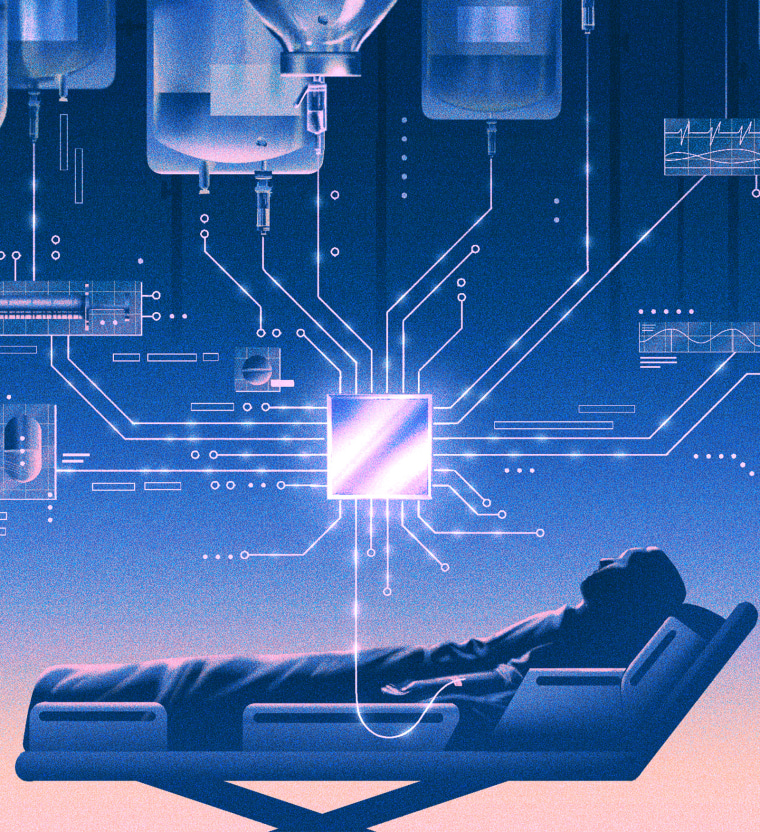
The Silent Partner in the Exam Room
You’re sitting on the crinkly paper of the exam table. You’ve just explained that weird symptom, the one you spent three hours Googling at midnight. Your doctor is listening, nodding, and tapping away at their computer. You assume they're just updating your chart or sending a prescription to the pharmacy. But something else is happening. Something revolutionary. Your doctor is likely consulting a silent partner. An AI.
It feels like something from a sci-fi movie, but it's happening right now in clinics all across America. There’s a quiet revolution going on in medicine, and it’s powered by an AI tool called OpenEvidence. And the most surprising part? Nearly two-thirds of U.S. doctors are already using it. It has quickly become a fast friend to the medical community, yet most of us patients have no idea it even exists.
This isn't about replacing your doctor with a robot. Not at all. It's about giving them a superpower. Think of it less as a replacement and more as the world's most knowledgeable medical assistant, one that can sift through mountains of research in seconds.
A Doctor's Secret Weapon
So, what is this secret tool? OpenEvidence is an AI-powered medical search engine. It helps doctors make better, faster decisions by giving them instant access to the latest studies, treatment protocols, and medical knowledge. Instead of spending hours digging through medical journals, your doctor can ask a complex question and get a synthesized, evidence-based answer in moments.
Why are they so happy to use it? Because it makes them better at their jobs. Medicine is an impossibly vast field that changes every single day. No human can possibly keep up with it all. This tool helps bridge that gap. It assists in complex tasks like planning for a surgery or flagging a potential allergy that might have been missed in a thick patient file. It’s about safety, efficiency, and ultimately, better care for you.
Doctors are embracing this because it allows them to do more of what they're best at: applying human wisdom and empathy to complex problems. The AI provides the data. The doctor provides the critical thinking and the human touch. It’s the ultimate combination of human expert and machine intelligence.
But What About the Risks?
It’s natural to feel a little uneasy about this. When we hear about AI, our minds can jump to a future where human skills are no longer needed. And that’s a valid concern. The research does point to a potential long-term risk: that an over-reliance on tools like OpenEvidence could eventually erode a doctor's own critical thinking and evaluation skills. It's a possibility that we have to watch.
But right now, that’s not what’s happening. Doctors aren't blindly following AI commands. They are using it as an advisory tool, a way to double-check their own knowledge and explore every possible option for their patients. The final call always rests with the trained, experienced human in the white coat. They are still the ones who know you, your history, and your unique situation.
The secret isn't that your doctor is being replaced. The secret is that they now have a powerful new ally in their mission to keep you healthy. It’s a quiet partnership happening behind the screen, one that combines the best of technology with the irreplaceable value of human care.